
Shelley's Heart
Percy Bysshe Shelley, Hermeticism and the Secret Societies

Dear Crew of the USS Tom Clancy,
Please enjoy this piece on Percy Shelley, Adonais and the Rosicrucian Order.
Matt
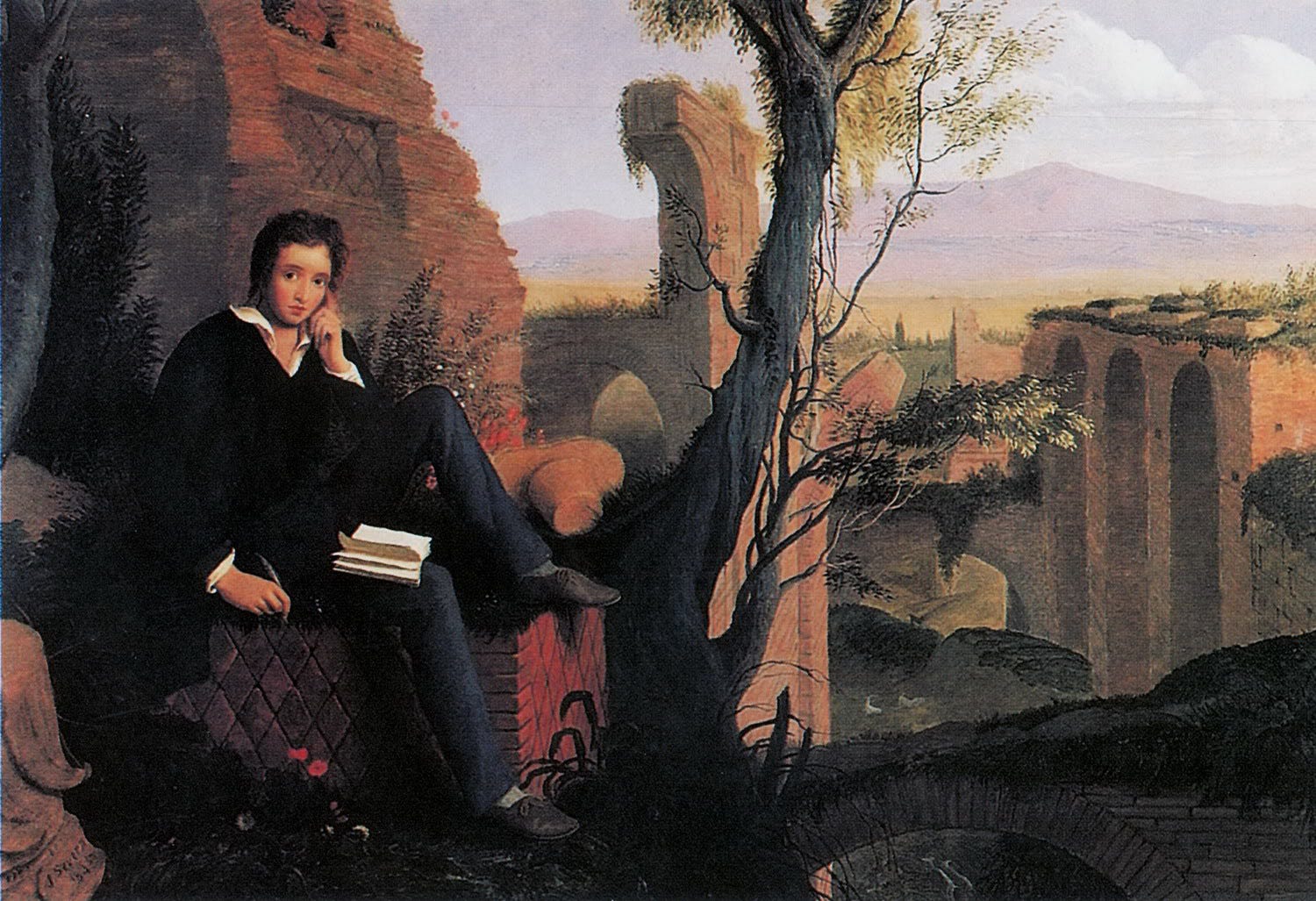
On May 1820 Percy Bysshe Shelley wrote two insistent letters from Pisa to his editor in London Leigh Hunt. Shelley’s queries to Hunt, publisher of the Examiner, spoke openly of political reform:
“I wish to ask you if you know of any bookseller who would like to publish a little volume of popular songs wholly political, and designed to awaken and direct the imagination of the reformers. I see you smile—but answer my question.”
Another letter in the same package asked the same question in a different manner:
“Do you know any bookseller who would publish for me an octavo volume entitled A Philosophical View of Reform? It is boldly, but temperately written, and I think readable. It is intended for a kind of standard book for the philosophical reformers politically considered” (Shelley, Letters).
Leigh Hunt never responded to either letter. As Paul Foot noted later:
“All this was inspired by a political event in Britain. In August 1819 a huge peaceful protest demonstration organized by the merging trade unions met in carnival atmosphere at St Peter’s fields in Manchester. Before the speakers could properly address the meeting, it was attacked by the yeomanry, the special constabulary drawn from men of property. The gallant mounted burghers hacked their way through the unarmed crowd, killing eleven people with their swords and injuring many others. The British ruling class swaggered for months afterwards at the bravery of its ‘stout yeomanry’ at Peterloo— (Foot p 14)
Hunt was worried—both in publishing Shelley’s work and even in responding to letters inquiring about it—about the reactionary laws the Tories could use against political writings in England in 1820, not to mention the social pressures that could be marshaled by the private Society for the Prosecution of Vice.
Paul Foot describes the moment of revelation, the spark for the poet to take literary action:
“Shelley heard the news of Peterloo on 5 September 1819, when he was living in Leghorn in Italy. He immediately sat down to write one of the great political protest poems of all time. The Mask of Anarchy starts with a furious attack on the Conservative administration in Britain” (Foot p 14-15).
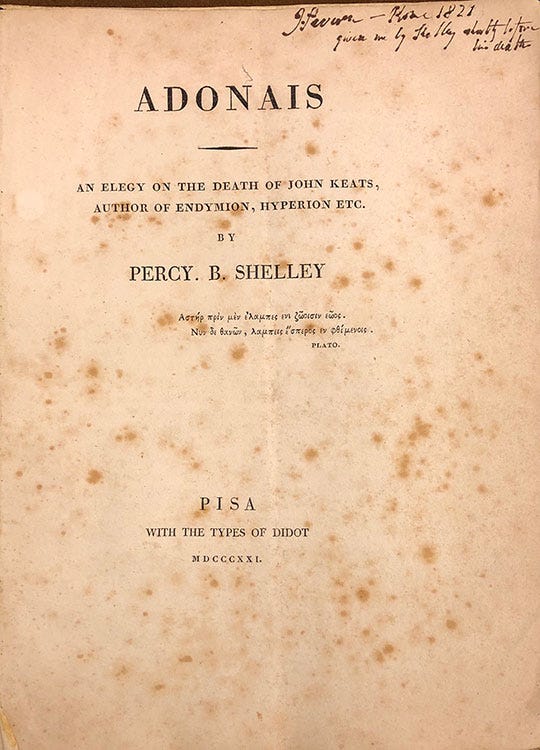
Shelley was not able to get his political tracts published during this time. Then, as he himself notes in the Preface to Adonais, fortune struck in the guise of tragedy:
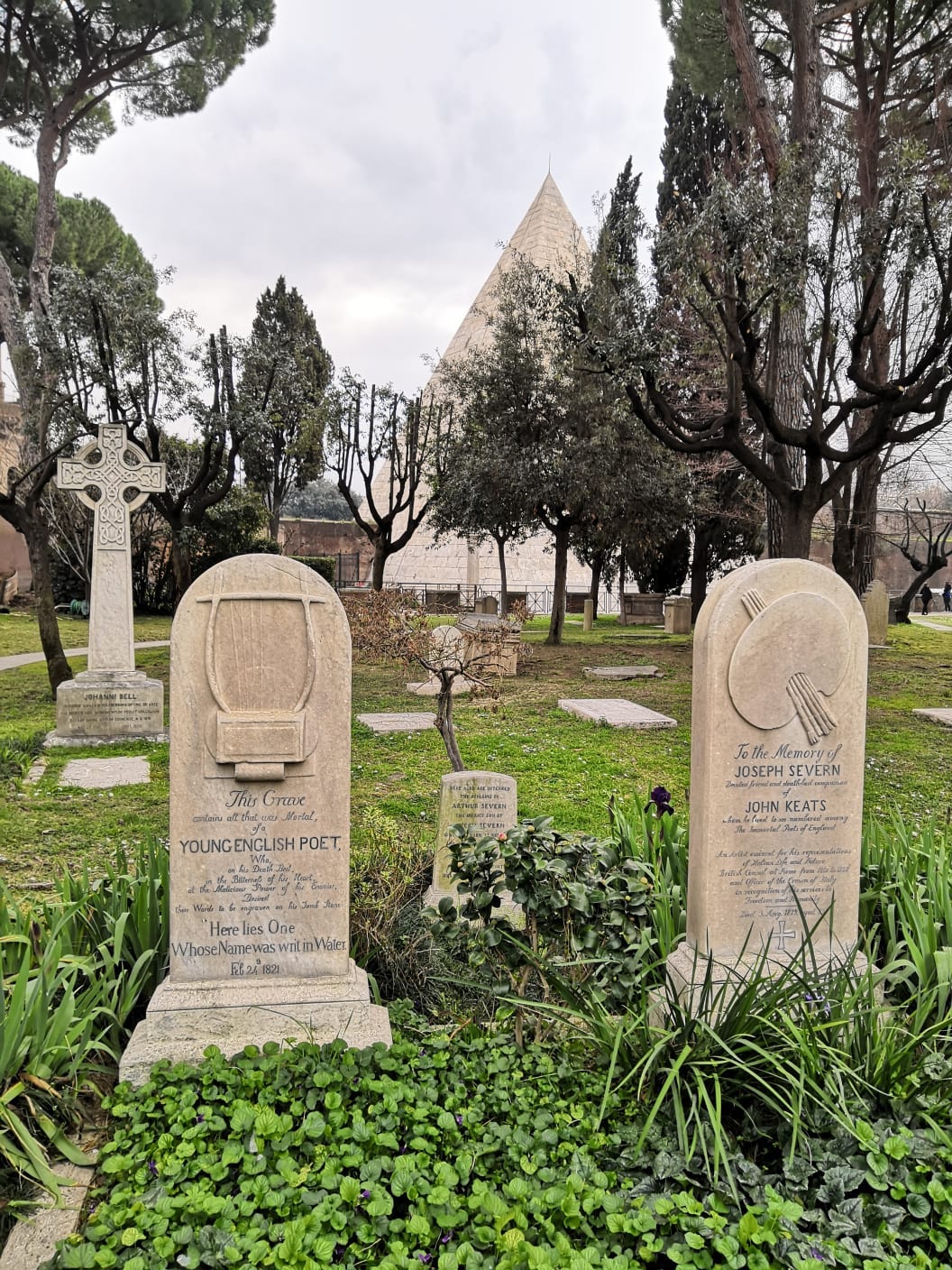
“John Keaets, died at Rome of a consumption, in his twenty-fourth year, on the ___ of ____ 1821; and was buried in the romantic and lonely cemetery of the protestants in that city, under the pyramid which is the tomb of Cestius, and the massy walls and towers, now mouldering and desolate, which formed the circuit of antient Rome” (Shelley).
His epigram attributed to Plato, in the original Greek, adorns the opening of the Preface. Shelley translated it this way:
Thou wert the morning star among the living,
Ere thy fair light had fled—
Now, having died, thou art as Hesperus, giving
New Splendour to the dead.
Shelley, I argue, was able to mask a political and metaphysical intent in publishing Adonias with the elegiac function—a surface level reading of the text as only about John Keats’ untimely passing also allowed for a dangerous political and spiritual message to bypass the internal censors of the publishers and the external ones of the British government and her gentry.
Shelley accomplishes this by reaching back into European history to the late 1500’s and early 1600’s, a time of similar continental strife and internal dissention on the British Isles, and to a social movement that arose during these times called the Rosicrucian Brotherhood, who announced themselves in the form of three literary manifestos that appeared first in the German Palatinate and then Paris and London.
In 1828, American Noah Webster’s Eponymous Dictionary contained an entry on the Rosicrucian order that demonstrates how they were thought of during Shelley’s time:
ROSICRU’CIAN, noun [Latin ros, dew, and crux, cross; dew, the most powerful dissolvent of gold, according to these fanatics, and cross, the emblem of light.]
The Rosicrucians were a sect or cabal of hermetical philosophers, or rather fanatics, who sprung up in Germany in the fourteenth century, and made great pretensions to science; and among other things, pretended to be masters of the secret of the philosopher’s stone.
ROSICRU’CIAN, adjective Pertaining to the Rosicrucians, or their arts (Websters).
